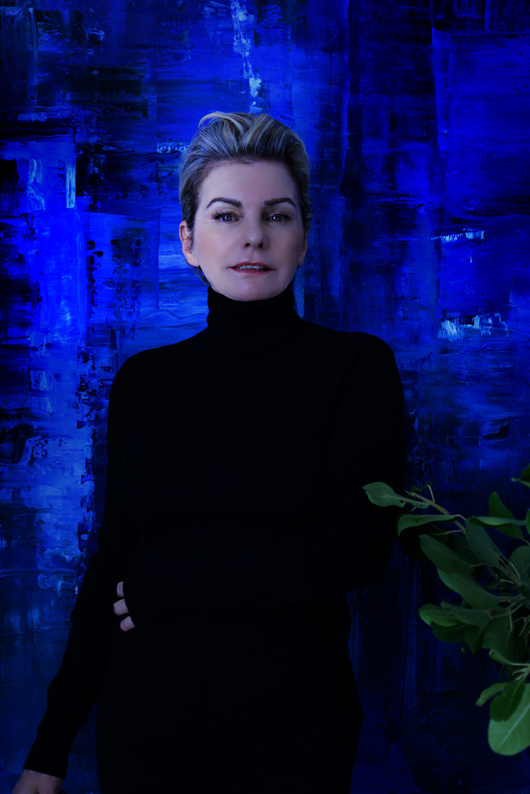
Photograph by: Krisjan Rossow

ABOUT CATHERINE

Catherine Timotei’s art work features key aesthetics used by many of the sought after artists in today’s international market. She is drawing inspiration from various array of influences, from Renaissance masters to the 20th Century Abstract Expressionism movement. Her art work strives for un untutored style through a celebration of color, form , contrast and scale.
It was at MoMA New York with the heroes of abstract expressionism, which triggered her change over from the European modernism to abstract expressionism. Her radical shift in artistic direction rejected the inherited concept that art should copy nature. From here the visual theories become the focus of her artwork.
Timotei studied art in Florence and New York and hold several solo exhibitions in Botswana, South Africa, New York and Monte Carlo.
Catherine Timoteiis the founder of the Leonardo Da Vinci gallery in Cape Town.

Known for her expanding dimension  and exuberant colourful paintings, French Corsican artist Catherine Timotei’s work is drawing inspiration from a diverse array of influences, from Renaissance masters to the 20th- Century abstract Expressionism movement.

Her theory of pure colour echoes the powerful impressions left by Hans Hoffmann ” making a painting is almost a physical struggle”, and reflects the artist constant search to give volume presence; between reality and immateriality, between two-dimensional extension and three- dimensional depth.

With the moral impulse of the American expressionist heroes strongly entangled, she bridges the link between European and American expressionism to develop her own expressive potential. Her artwork is full of allusions and associations that are not easily deciphered, leaving room for it to take on a diaphanous form.

Timotei’s work features key aesthetics used by many of the most sought-after artists in today’s international market. Her understanding of abstract art has  culminated through her travels throughout the world.  This has pushed her art to reflect the juxtaposition between her rebellious nature and the need to be guided by honour, structure and ethics.

CATHERINE’S ART TECHNIQUES

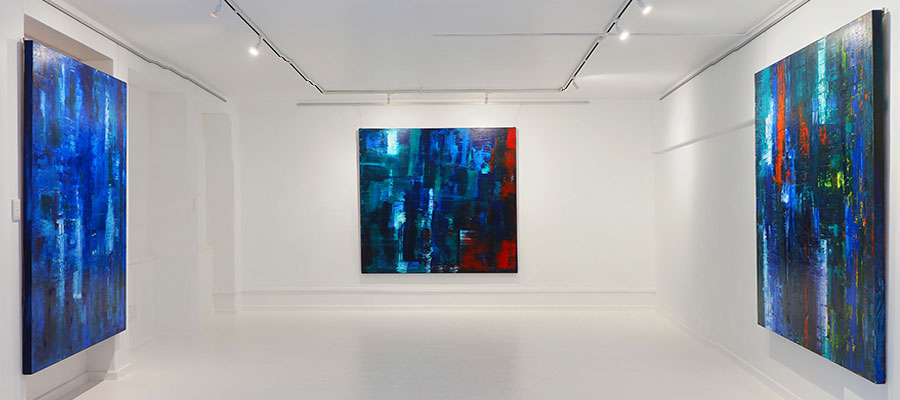
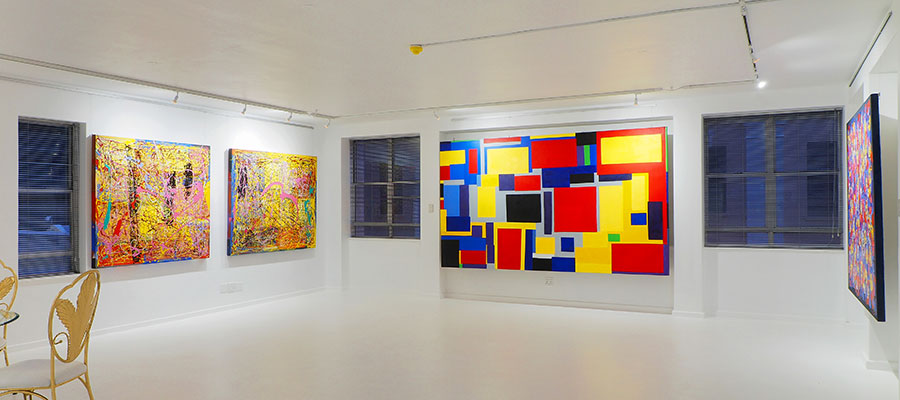
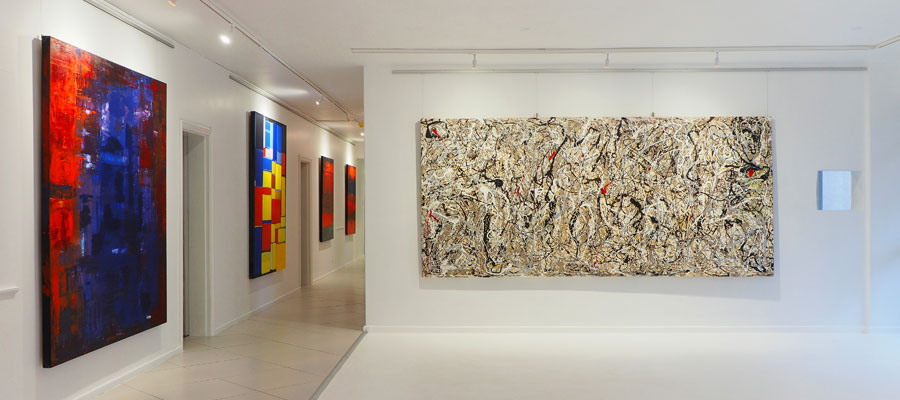
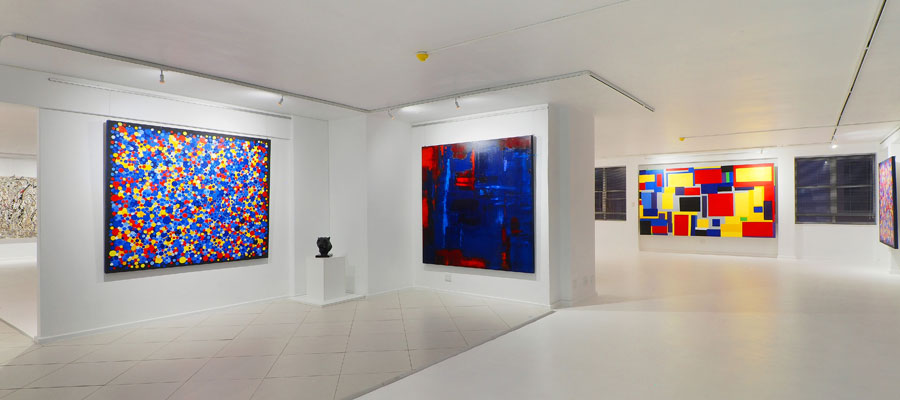
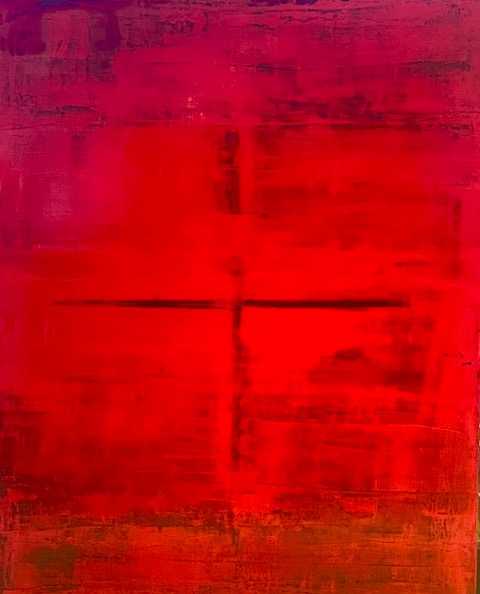
Timotei uses color as an approach that concentrate on study of consciousness and the object if direct experience. She uses oil paint, a mix of pure color pigment and linseed oil to create her large scale paintings, through a combination of various art techniques and prolonged visual analysis. The beauty of her work originates from the vibrant colors that inescapably raise emotion to the viewer. Timotei has a unique gift, a natural talent and attention to detail that enhances her ability to excel in her aesthetic approach to create beauty through art. Her artistic choices are grounded in philosophical interest to express emotion and touch the human soul. To echo Gilles Deleuze book “la Logique de la sensation” where he talks about Phenomenology and the power of color to undo form. Color holds a prominent place in the series of primordial phenomena. This is why color as element of art may be used and can collaborate to the highest aesthetics purpose.

ABSTRACT EXPRESSIONISM

Abstract Expressionism re-defines the purpose of art from social consciousness to human consciousness, stressing the Universal instead of the particular. Abstract Expressionism, marks the transition from lack of subject matter to abstract content. The intellectual capital of the European masters brought to the canvas of the twenty-first century. Certain so-called Abstraction is not Abstraction at all. It is the realism of our time.

Art is being interactive, with social bounding, and constitutes a collective narrative in our own virtual reality. Interactivity is a key element in today’s contemporary art. It has changed our perception of art and it challenges the role of the artist. With the rise and fall of emerging economies, Abstract Art expresses the hope and despair felt by many individuals.

There is a deep interactivity with the Medium as the medium produces meaning.

“Formal theories reveal a visual dimension underlying better-known picture theories.Patterns of elements such as lines, shapes, and spaces, along with their properties,generate emotional responses and follow visual styles in society. The elements combine into systems that create perspectives on the world. Formal awareness may generate an understanding of visual philosophies and their inherent values and consequences.
From film and literary aesthetics, narrative theory offers analytical structures that reproduce realism through supposed objectivity, rationality, and autonomy in dialogue with conventions and genres. Critical, cultural, and poststructural theories assert the inauthenticity of pictures, social construction  of representation, and instability of meaning. Visual aesthetics, analysis, criticism, and ethics have entered flux in digital times.” Kevin G Barnhurst”, University Illinois, Chicago.

Catherine Timotei works at the intersection of abstraction and architecture. For over fifteen years, her practice has explored color as structure — not surface. Each composition is conceived as a spatial force, shaping atmosphere rather than illustrating it. Her works engage volume, light, and materiality,
establishing presence within a room rather than merely occupying it.

Color is treated as construction — layered, weighted, and deliberate. Timotei’s paintings are defined by density, tension, and controlled intensity. They do not function as ornament, but as structural anchors within architectural environments.

Based between Europe and South Africa, Catherine Timotei collaborates with private collectors and refined interior spaces seeking works that transform space through compositional clarity and emotional gravity. Her practice reflects continuity, discipline, and authority — a sustained investigation into
abstraction as spatial presence.
MISSION STATEMENT

By integrating artistic statements with sustainability and social issues, Catherine Timotei positions her work as more than just visual art. It becomes part of a narrative that resonates with modern collectors and art enthusiasts. Her profound exploration of abstract expressionism and her commitment to using art as a medium for societal transformation continues to inspire and captivate audiences globally.

CATHERINE TIMOTEI IS
THE FOUNDER OF LDV GALLERY

VIEW ART

Gallery